People may think farmers prop their stockinged feet up by the woodstove in winter, enjoying novels or video games and big bowls of potato chips all day, with nothing to do while it's cold and wet outside. After all, you can't plow mud, and tomatoes don't grow on cold, cloudy days.
Well, actually tomatoes do grow in winter, but not outside. Farmers and hyper-gardeners have myriad starts under grow-lights in warm spaces or on heated mats already.
Winter is when farmers are prepping for early planting. They know they've got to have your favorite summer produce--things you might well grow in your own garden--ready when your taste-buds crave them fresh and you just have to have the first local zucchini or tomato - you simply can't wait 'til yours are ready. By late summer when you're sated and are sneaking them on neighbors' porches, they're not gonna' be selling many. And especially if everyone is getting them free from gardening neighbors.
This is also the time of year that farmers gather with their cohorts at conferences 'cuz they sure can't do it in any other season. Their families barely see them the rest of the year, unless they're working the fields too, which most probably are. One spouse often has a job in town, though.
Speaking of spouses. When you hear the word farmer, you probably think of a guy, no? Me, too, more often than not, I confess, even though I know numerous women who farm, either on their own, or as part of a family farm. The latest issue of Oregon Tilth magazine, In Good Tilth, is devoted to women farmers and food leaders - and not just locally. I highly recommend finding a copy (in Corvallis at First Alternative Co-ops, by the produce section. It's free!), or you can read it online.
A Novel Idea
A decade ago, a group of folks from non-profits that dealt with food recognized the difficulty of food producers and food consumers making critical contact, especially as the local food movement was gaining traction. So, they organized a gathering where farmers, orchardists, ranchers, processors, grocers, restaurants, schools and others could meet, share concerns and ideas, and exchange business cards. They named it the Local Food Connection. Not every farm or food producer had a website back then, nor were search engines all that efficient. The idea worked and has grown. Each year, about half the folks attending are there for the first time. It's inspiring to see young people connecting not just with potential customers, but to meet mentors in their own fields (no pun intended).
One of the highlights is the always-amazing lunch. Ingredients are generously provided by food producers attending and the Lane Community College's culinary arts students prepare an awesome lunch. Even the continental breakfast was excellent: blueberry coffee cake made with local grains and berries, locally-crafted herbal teas, smoothies, keifer, milks, granola, yogurt, hummus, nuts, dried fruit, etc. It's a world away from typical conference fare of glazed donuts and coffee with artificial creamers. (Bleh!)
While I learned a lot at the workshop featuring chefs with their own farms supplying ingredients (Excelsior Inn & Ristorante of Eugene, .Gathering Together Farm, Philomath, and Agrarian Ales, Coburg), I had a most interesting conversation with a fellow from SnoTemp, a local company that stores and ships so many of the local and regional products that end up at my local food co-op, grocery stores and restaurants. I really hadn't thought much about where businesses stored their foods off season or how they keep them at the best temperatures, be it frozen, cool or warm and dry. "But what happens if the power goes off?" I asked. The manager I talked with said they would be fine for several days if doors weren't opened much because the building is so well-insulated. Interesting!
Seeds of Security
Monday was spent with farmers and buyers. Friday and Saturday will be spent learning about and from the folks who, literally, are at the very source of it all: seeds. We are truly blessed to have some of the best seed professionals in the world right here in "Cascadia" (northern California to southern British Columbia, Idaho and parts of Montana. Even right here in the Willamette Valley. Stay tuned.
Wednesday, February 3, 2016

Sunday, January 24, 2016
Spring Teaser
Friday was one of those unpredicted, very unexpected spring-like days in January. For a little while, there was nary a cloud in the blue sky and the expansive fields of sprouting grasses and wheat were an iridescent green.
Yes, rivers were swollen from recent rains and many ditches were overflowing, spilling big puddles-almost ponds into some yards and fields, but it was one of those glorious bonuses that makes you smile - makes everyone cheerful.
But, of course! It all made sense listening to the news later in the day about the storm bearing down on the east coast. It seems that when they get whacked with nasty weather, we enjoy the opposite - and vice versa. Funny how that works. Last year when Boston was almost literally buried in snow, we were enjoying one of the warmest, driest winters in recent memory.

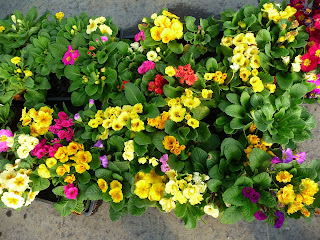
As luck would have it, I had an interview scheduled on Friday that made the day all the nicer. It was at Peoria Gardens, east of Corvallis. I spent an hour wandering through some of the glass houses of their nursery with the son of the founder - now general manager, Ben Verhoeven, absorbing the history and vibrant colors that are starting to grace gardens of those with the greenest thumbs. Soon, the more fair-weather gardeners, and those just developing an "addiction" to gardening, will be unable to resist the magnetic pull of the 4-inch pots of color lined up at local nurseries.
If you find such plants irresistible and live in the Willamette Valley, you've seen Peoria Gardens
 tags on flowers, herbs and vegetables for decades in local nurseries or independent businesses. You probably have--or have had--some of them in your garden.
Or, if you've been through Corvallis in the summer, you've seen their huge, colorful baskets dripping with flowers, hanging from street lamps.
There's an interesting history and some exceptionally nice people behind all that life and color. You can learn about them in my article on Peoria Gardens that will appear in the spring issue of Take Root magazine, due out April 1st.
In the meantime, rest assured, the wet-weather streams will dry up, rivers will slow, soil will warm and we'll be surrounded by lots and lots of glorious color and new life.
Update: the article is available now: http://ezine.takerootmagazine.com/HTML5/Duhn-Associates-TAKE-ROOT-Magazine-Spring-2016?pageNum=20. Better still, get a copy at your favorite store (see website: www.takerootmagazine.com for locations). It's chock full of interesting people and places, well worth keeping for future reference when you're ready to explore this glorious region.
Yes, rivers were swollen from recent rains and many ditches were overflowing, spilling big puddles-almost ponds into some yards and fields, but it was one of those glorious bonuses that makes you smile - makes everyone cheerful.
But, of course! It all made sense listening to the news later in the day about the storm bearing down on the east coast. It seems that when they get whacked with nasty weather, we enjoy the opposite - and vice versa. Funny how that works. Last year when Boston was almost literally buried in snow, we were enjoying one of the warmest, driest winters in recent memory.

As luck would have it, I had an interview scheduled on Friday that made the day all the nicer. It was at Peoria Gardens, east of Corvallis. I spent an hour wandering through some of the glass houses of their nursery with the son of the founder - now general manager, Ben Verhoeven, absorbing the history and vibrant colors that are starting to grace gardens of those with the greenest thumbs. Soon, the more fair-weather gardeners, and those just developing an "addiction" to gardening, will be unable to resist the magnetic pull of the 4-inch pots of color lined up at local nurseries.

Or, if you've been through Corvallis in the summer, you've seen their huge, colorful baskets dripping with flowers, hanging from street lamps.
There's an interesting history and some exceptionally nice people behind all that life and color. You can learn about them in my article on Peoria Gardens that will appear in the spring issue of Take Root magazine, due out April 1st.
In the meantime, rest assured, the wet-weather streams will dry up, rivers will slow, soil will warm and we'll be surrounded by lots and lots of glorious color and new life.
Update: the article is available now: http://ezine.takerootmagazine.com/HTML5/Duhn-Associates-TAKE-ROOT-Magazine-Spring-2016?pageNum=20. Better still, get a copy at your favorite store (see website: www.takerootmagazine.com for locations). It's chock full of interesting people and places, well worth keeping for future reference when you're ready to explore this glorious region.
Monday, January 18, 2016
The Key Ingredient
Our winter
farmers' market opened on Saturday.
It's been a long two months since the end
of the summer markets, especially for
people who
prefer local
foods nowadays. Not surprisingly, the place was packed, making
it hard to even approach
some vendors. That's
ok, we'll see them next time. I
got the essentials.
I could spend paragraphs waxing poetic about getting all the ingredients for a complete meal, even in winter, from grains and breads to all kinds of animal products and vegetables - even fresh fruit (persimmons!). Or that you can get prepared foods too, including soups delivered to your home or office - by bicycle.
But, as I began writing, I realized there was something deeper I brought home. Something we can't eat, but is nourishing nonetheless. Essential, even. It's the intangible at the heart of any local market or small business, the heart of the whole local food “movement.” It's the relationships established between farmer and eater. No two are alike, nor can they be franchised. They're what make each conversation and transaction unique, each business healthy and the overall community strong.
They're also why it takes me a long time to get through any market. My husband has learned that if he comes with me he'd better be prepared because it's gonna' take a while.
Winning Fate's Lottery
In fact, it was two of the vendors from our rural market who moved our winter market into town where it might attract more customers. Did it ever! That was the market we squeezed in to on Saturday. They've done a fantastic job, but it took a few years and more work than people realize.
We have no clue what it takes for the vendors to prep and set up for markets (early hours, sleepless nights going through mental checklists, and preparing for all the customers who stop at the ATM on the way and expect change for a $20 right off the bat). That doesn't include all it took to grow, harvest, process and store their produce, grains, meats, eggs, honey, nuts, etc. If we knew, we'd realize what a bargain local food is and not waste a morsel.
The Key Ingredient
But it's the relationships I found myself thinking about after leaving the market. I've known some of the vendors since their first year in business, before their kids were born, or at least when the kids were pre-schoolers barely able to count a dozen, let alone make change. The memories make me feel both old and in awe.
Farm kids often learn lessons their friends in town don't. They're literally surrounded by the family's livelihood (or at least part of it). They're hyper-aware of seasons and weather and likely had to pitch in when weather or harvest was overwhelming, or a critical worker couldn't be there. They've probably pitched in at markets, doing lots of heavy lifting to unload and set up. Maybe they dread the hours of having to tally figures in their heads under the scrutiny of customers (it's exhausting) and count change. Or, interact with people when they feel really uncomfortable doing so (think puberty). Maybe they raised the animal whose parts are coldly listed by the pound on the blackboard, named it and fed it every morning before school, or grew the strawberries on display, missing a friend's birthday party because the berries needed to be harvested and prepped for market.
Can't Keep Them Down on the Farm...
On the way home from the market I thought about conversations that day, and:
The farming couple I knew even before they were married and their son who is on scholarship at Harvard. He grew up on a vegetable farm, but his parents and grandparents had science degrees and he inherited the gene. Where will it take him?
The kids of another couple were home-schooled by their mom, who works at a hospital, and dad, who is a full-time farmer. Each market season they were a little taller and less shy. Then, one summer the oldest son brought goods to market and sold all by himself. None of the kids were at this week's market; I look forward to learning what they're up to now. As I purchased meat that I know they helped raise, the mom and I got distracted by using my credit card with her smart phone, a transaction neither of us could have imagined when I first met them a decade ago. She had spent the evening before figuring out how to allow customers to use that same technology with pre-paid farm cards. Even the parents are still learning in this ever-changing world.
The daughter of another vendor grew up in a home without electricity or running water, by choice of her parents. It's a lovely house in the country with lots of hand-crafted features by the parents, sometimes with wood grown on the property, whence also comes the wood for the heating and cook stoves. She grew up without a television, a gift that stimulated her imagination, as did her love of books even before she could read. She learned to make just about anything she wanted to play with. She, too, was home-schooled the first few years and when she eventually took the bus to school in town, she was ahead of her classmates. Today, she travels the globe giving talks in front of big crowds of "techies" for the software company she works for. I watched a you-tube video of one of her TED-like talks. Much of it was in a technical language I don't understand, but the essence of that little girl shone through the lovely, self-confident woman I saw onscreen. Someday she may want to settle down. When she does, she'll already know how to plant a garden, preserve its bounty, raise animals and keep bees. In the meantime, “Oh, the places she'll go!” to paraphrase a favorite book.
The daughter of another vendor who, 20 years ago, impressed me with her strong work ethic when she was barely in grade school, is now a medical doctor.
The son of another just started a year abroad in South America, near where I spent almost four years. Yes, I'm envious!
Another vendor has no kids, but has been dealing with her husband's life-threatening illness. While she looks great and was cheerful for someone so stressed, I glimpsed in her face the age I felt just thinking about all those grown kids.
What I brought home from the market was a reminder that there is depth to conversations with people you've known for decades that transcends the purchase of any item or even chat about the rivers reaching flood-stage outdoors.
Few items at a farmers' market have labels but, if they did, the relationship with the vendor should be listed as a key nutritional ingredient.
I could spend paragraphs waxing poetic about getting all the ingredients for a complete meal, even in winter, from grains and breads to all kinds of animal products and vegetables - even fresh fruit (persimmons!). Or that you can get prepared foods too, including soups delivered to your home or office - by bicycle.
But, as I began writing, I realized there was something deeper I brought home. Something we can't eat, but is nourishing nonetheless. Essential, even. It's the intangible at the heart of any local market or small business, the heart of the whole local food “movement.” It's the relationships established between farmer and eater. No two are alike, nor can they be franchised. They're what make each conversation and transaction unique, each business healthy and the overall community strong.
They're also why it takes me a long time to get through any market. My husband has learned that if he comes with me he'd better be prepared because it's gonna' take a while.
Winning Fate's Lottery
I realized long ago that we live in
an exceptional place and I feel
truly fortunate to have landed here.
I'm also fortunate in that I've gotten to know most of the
farmers at the markets over the years, through interviews for
articles I've written about them, or various events I helped organize,
including a farmers' market in our rural neighborhood a couple
decades ago. I've worked a few farmers' markets myself and sold
produce I had grown at some, and elsewhere.
In fact, it was two of the vendors from our rural market who moved our winter market into town where it might attract more customers. Did it ever! That was the market we squeezed in to on Saturday. They've done a fantastic job, but it took a few years and more work than people realize.
We have no clue what it takes for the vendors to prep and set up for markets (early hours, sleepless nights going through mental checklists, and preparing for all the customers who stop at the ATM on the way and expect change for a $20 right off the bat). That doesn't include all it took to grow, harvest, process and store their produce, grains, meats, eggs, honey, nuts, etc. If we knew, we'd realize what a bargain local food is and not waste a morsel.
The Key Ingredient
But it's the relationships I found myself thinking about after leaving the market. I've known some of the vendors since their first year in business, before their kids were born, or at least when the kids were pre-schoolers barely able to count a dozen, let alone make change. The memories make me feel both old and in awe.
Farm kids often learn lessons their friends in town don't. They're literally surrounded by the family's livelihood (or at least part of it). They're hyper-aware of seasons and weather and likely had to pitch in when weather or harvest was overwhelming, or a critical worker couldn't be there. They've probably pitched in at markets, doing lots of heavy lifting to unload and set up. Maybe they dread the hours of having to tally figures in their heads under the scrutiny of customers (it's exhausting) and count change. Or, interact with people when they feel really uncomfortable doing so (think puberty). Maybe they raised the animal whose parts are coldly listed by the pound on the blackboard, named it and fed it every morning before school, or grew the strawberries on display, missing a friend's birthday party because the berries needed to be harvested and prepped for market.
Can't Keep Them Down on the Farm...
On the way home from the market I thought about conversations that day, and:
The farming couple I knew even before they were married and their son who is on scholarship at Harvard. He grew up on a vegetable farm, but his parents and grandparents had science degrees and he inherited the gene. Where will it take him?
The kids of another couple were home-schooled by their mom, who works at a hospital, and dad, who is a full-time farmer. Each market season they were a little taller and less shy. Then, one summer the oldest son brought goods to market and sold all by himself. None of the kids were at this week's market; I look forward to learning what they're up to now. As I purchased meat that I know they helped raise, the mom and I got distracted by using my credit card with her smart phone, a transaction neither of us could have imagined when I first met them a decade ago. She had spent the evening before figuring out how to allow customers to use that same technology with pre-paid farm cards. Even the parents are still learning in this ever-changing world.
The daughter of another vendor grew up in a home without electricity or running water, by choice of her parents. It's a lovely house in the country with lots of hand-crafted features by the parents, sometimes with wood grown on the property, whence also comes the wood for the heating and cook stoves. She grew up without a television, a gift that stimulated her imagination, as did her love of books even before she could read. She learned to make just about anything she wanted to play with. She, too, was home-schooled the first few years and when she eventually took the bus to school in town, she was ahead of her classmates. Today, she travels the globe giving talks in front of big crowds of "techies" for the software company she works for. I watched a you-tube video of one of her TED-like talks. Much of it was in a technical language I don't understand, but the essence of that little girl shone through the lovely, self-confident woman I saw onscreen. Someday she may want to settle down. When she does, she'll already know how to plant a garden, preserve its bounty, raise animals and keep bees. In the meantime, “Oh, the places she'll go!” to paraphrase a favorite book.
The daughter of another vendor who, 20 years ago, impressed me with her strong work ethic when she was barely in grade school, is now a medical doctor.
The son of another just started a year abroad in South America, near where I spent almost four years. Yes, I'm envious!
Another vendor has no kids, but has been dealing with her husband's life-threatening illness. While she looks great and was cheerful for someone so stressed, I glimpsed in her face the age I felt just thinking about all those grown kids.
What I brought home from the market was a reminder that there is depth to conversations with people you've known for decades that transcends the purchase of any item or even chat about the rivers reaching flood-stage outdoors.
Few items at a farmers' market have labels but, if they did, the relationship with the vendor should be listed as a key nutritional ingredient.
Sunday, January 10, 2016
Stepping Into Another World
Over many years, I've met countless creative types in our amazing community. As a writer, I get to ask such people lots of questions when they agree to an interview. It's the coolest job ever and constantly inspiring.
There are creative people in any category you can think of and many you'd not. This community is a rich beehive of activity by artists of all stripes - from fine arts requiring brushes, charcoal or pencils, to others requiring bare hands and a few simple tools, to still others using computers and sophisticated instruments. There are whole categories of art: fiber, metal, paper, wood and clay to music, film and writing, with subcategories within each. All require passion - and there's lots of that going around here. Inspiration is everywhere in our environment and among the people who live here. When I stop to think about it, everyone I know has some degree of passion about creating something, be it to eat, use or savor with the eyes and heart. Some are very talented, indeed.
Ingredients
Everyone who creates is constantly looking for ideas and materials, be they physical ones you can touch or emotional ones that touch you. I've written about people who take physical materials - tin cans, used tires, phone books, old clothes, etc. and turned them in to art or new items for everyday use. This week, I met a fellow who does that with used horseshoes.
He's not the only one to use horseshoes, including used ones, for other purposes. Many a horseshoe is soldered together to spell out names of ranches, or hold jackets, hats, toilet paper or wine bottles.
 |
| An elk heading towards Main Street... |
Bud Thomas uses old horseshoes to make life-size animals, from squirrels and owls to elk and rearing horses, plus salmon, herons, wasp nests, trees, turtles, eagles, dogs -- whatever nature inspires.
His studio is in Philomath, in the very spot where he was a self-employed auto mechanic for many years. What started as something to keep him oblivious to winter until he could get back on his horse and ride trails into wilderness caught the eyes of others and soon he quit is day job.
Bud generously shared some of his time with me to explain his process and show me some of his current work. Like most artists, he doesn't like to show a work in progress, just as writers are loathe

Thanks to local farriers, he rarely runs out of shoes. It's amazing the sizes and thicknesses in his many barrels of them. Their initial cleaning is in a cement mixer, then comes the process of sensing what they will become - and how.


You can see Bud's work on the internet, and it's a good place to start, but if you live near Philomath, it's worth the trip to stop by his studio. If he's not there, you don't have to go in, some of his animals are displayed outside, on Main Street, until they get adopted. (Since it's now one-way, heading west, you'll catch sight of an animal, such as the elk above, on your right between the first two traffic lights.)
I can guarantee you'll be inspired.

Saturday, January 2, 2016
New Year Questions
The first day of the year is a big day of wonder: what will the year bring? What can we do to make good things happen? What will we have no control over? There will be good and bad, and some things we can't even imagine today.
As we walked through one of our favorite spots in one of the beautiful forests that surround us, we couldn't help but wonder aloud just how much longer it will be there. So many of the areas around it have been clear-cut and this has some stunningly beautiful huge, trees. Each could be worth a fortune. Some of them may be almost too big to fit any of the remaining mills. What a wonderful "shame" that would be.
We've watched, heartbroken, as so many forests have been clear-cut in our neighborhood in the last 10 to 15 years. Of course, trees do come back and healthy ones are stretching above the weeds now in most of those cuts. Still, it will take decades for them to have the mix of varied and natural undergrowth, what loggers consider "trash" trees (madrone, maples, oaks, etc.) and all the wildflowers and berries that magically appear after time and support unseen wildlife. Those forests have given us so many wonderful hikes and lessons in seasons, flora and fauna. News of bear and bobcat sitings ripple through the neighborhood occasionally, as do complaints about people showing up to shoot their guns without permission, or ride motorized vehicles where they're not allowed, especially during dry, hot months when fire-danger is high. Coyote choruses are heard regularly and nothing compares to stepping outside in the still of night to listen to owls visiting from one woods to another. Most everyone who lives out here enjoys walks in the forests (even the clear-cuts when necessary) as much as we do. I joke that it's been the best health insurance we could ever invest in since it's so beautiful and inspiring you want to climb the wooded hills every day. It's no joke, though. It's true.
May we all have many more new years to enjoy the forests. As we do, I often wonder what the beautiful trees we used to enjoy--but were cut and carried off--ever became: walls? furniture? cabinets? beds? I hope they're bringing as much comfort and pleasure in their new stations in life as they did when we knew them. Our house is built of wood, as are our furniture, cabinets, fence posts, etc. and we use wood as heat. We also have lots of books and, as a writer, I go through reams of paper. It's good to remind myself that we're living in, surrounded and warmed by what was once part of a forest that brought others joy, lessons and health at one time too.
As we walked through one of our favorite spots in one of the beautiful forests that surround us, we couldn't help but wonder aloud just how much longer it will be there. So many of the areas around it have been clear-cut and this has some stunningly beautiful huge, trees. Each could be worth a fortune. Some of them may be almost too big to fit any of the remaining mills. What a wonderful "shame" that would be.
 |
| Photo by neighbor and walking buddy, Joan Martelli |
We've watched, heartbroken, as so many forests have been clear-cut in our neighborhood in the last 10 to 15 years. Of course, trees do come back and healthy ones are stretching above the weeds now in most of those cuts. Still, it will take decades for them to have the mix of varied and natural undergrowth, what loggers consider "trash" trees (madrone, maples, oaks, etc.) and all the wildflowers and berries that magically appear after time and support unseen wildlife. Those forests have given us so many wonderful hikes and lessons in seasons, flora and fauna. News of bear and bobcat sitings ripple through the neighborhood occasionally, as do complaints about people showing up to shoot their guns without permission, or ride motorized vehicles where they're not allowed, especially during dry, hot months when fire-danger is high. Coyote choruses are heard regularly and nothing compares to stepping outside in the still of night to listen to owls visiting from one woods to another. Most everyone who lives out here enjoys walks in the forests (even the clear-cuts when necessary) as much as we do. I joke that it's been the best health insurance we could ever invest in since it's so beautiful and inspiring you want to climb the wooded hills every day. It's no joke, though. It's true.
May we all have many more new years to enjoy the forests. As we do, I often wonder what the beautiful trees we used to enjoy--but were cut and carried off--ever became: walls? furniture? cabinets? beds? I hope they're bringing as much comfort and pleasure in their new stations in life as they did when we knew them. Our house is built of wood, as are our furniture, cabinets, fence posts, etc. and we use wood as heat. We also have lots of books and, as a writer, I go through reams of paper. It's good to remind myself that we're living in, surrounded and warmed by what was once part of a forest that brought others joy, lessons and health at one time too.
Sunday, December 13, 2015
Seeing Ourselves Through the Eyes of Others
We live in a community rich with opportunities to meet people from other countries. They are always interesting, no matter their background or station in life. I learn a surprising amount about us as U.S. citizens just through their questions about our culture and language. I also learn about myself by comparing their challenges to my own. It can be very humbling. Some of these visitors are college or language students, others are professors, researchers or professionals in various disciplines, still others are immigrants with little education but are willing to work hard. Many are parents sharing the experience of a new country with their children. Most arrived by plane or bus, often with multiple connections. Still others walked through deserts or came to our country in tiny boats, risking their lives.
How Do You Say...?
Kids are like little sponges soaking up language and culture with enviable speed and agility. When I'm in countries where I don't know the language, I find myself envying small children who speak and comprehend far better than I. Oh, to have their open minds and no fear of making a fool of myself. It's puzzling that our education system doesn't require foreign languages in kindergarten and primary grades when our brains are most receptive to learning them.
We don't consider how difficult the English language is until we have to explain it to speakers of other languages. So many everyday sayings ("That really threw me for a loop," or, "He won hands down," for example) are tricky to explain. Or why words that are spelled differently and have different meanings sound the same (their/there/they're, would/wood, cents/sense/scents, etc.). Or, why does English have so many silent letters in words (pneumonia, bright, could, etc.)?
In this era of increasing isolationism, led by some politicians and political candidates, I am reminded how surprising and revealing encounters with certain foreigners have been in my own life. More than once, I've had to rethink my attitude.
Once was when I met someone from a country I tended to view negatively for political reasons. While I still have negative views about the politics of that country, I learned a lot from her in long conversations over coffee or on walks. Probably without realizing it,she taught me to see her country's citizens as individuals who don't always agree with their governments, just as we don't ours. We may still disagree on certain things, but we both learned from each other. In other instances, I've met people from places I've never visited and probably never will. Still, learning about everyday lives and traditions and tasting some of their foods reveals a richness that gives depth to the name of the place every time I hear it now.
Stranger in a Strange Land
When I was young, I had the good fortune to live and work in a few other countries. It taught me how one's senses are heightened in such situations and foreigners notice things that locals often take for granted. When I meet foreigners now I have a greater appreciation for how exhausting it is to be somewhere where a different language is spoken. You are constantly trying to understand or search for the correct words and, initially, translate everything in your head. It's such a relief when you can finally understand without having to go through the translating step. I was often struck by how kind people were to me when I was the foreigner and how patient they were when I was learning their language. Eventually, I realized how they were correcting my errors without being obvious., or making me feel like a fool.
Everyday experiences like shopping for food in stores that don't carry what you're used to preparing, or getting places without your own car or knowing the language well enough to find your way or ask for help can be overwhelming. Finding an apartment or house is all the more difficult, yet critical. The kindness of just one stranger who helps in a seemingly small way (to them), such as giving directions or explaining how to prepare an unfamiliar food, can impact one's perception of an entire place. Subtle discrimination can have equally profound effects.
Travel abroad exposes us to negative experiences, as well. We can find ourselves very much in the minority, the seemingly stupid one because we don't speak the language, or we may face prejudice because of what we look like or the place we represent in the eyes of someone who doesn't know much about our country, except from negative headlines. Or, someone judges you by the negative experience they've had with others "like you." I've been in that situation too. It's extremely uncomfortable, both frustrating and instructive. Sometimes you can change someone's attitude, if they will talk with you. Others you can't.
You don't have to travel elsewhere to get that jolt of fresh perspective. We can get it by opening our doors and minds to new people and experiences, be they people from other countries or states, or even people we with work with or live near, but don't know yet.
Just in writing this, I realize I still have much to learn about foreigners in my own community, and even some neighbors. And now I know just who I'm going to challenge myself to get to know better.
 as U.S. citizens just through their questions about our culture and language. I also learn about myself by comparing their challenges to my own. It can be very humbling. Some of these visitors are college or language students, others are professors, researchers or professionals in various disciplines, still others are immigrants with little education but are willing to work hard. Many are parents sharing the experience of a new country with their children. Most arrived by plane or bus, often with multiple connections. Still others walked through deserts or came to our country in tiny boats, risking their lives.
How Do You Say...?
Kids are like little sponges soaking up language and culture with enviable speed and agility. When I'm in countries where I don't know the language, I find myself envying small children who speak and comprehend far better than I. Oh, to have their open minds and no fear of making a fool of myself. It's puzzling that our education system doesn't require foreign languages in kindergarten and primary grades when our brains are most receptive to learning them.
We don't consider how difficult the English language is until we have to explain it to speakers of other languages. So many everyday sayings ("That really threw me for a loop," or, "He won hands down," for example) are tricky to explain. Or why words that are spelled differently and have different meanings sound the same (their/there/they're, would/wood, cents/sense/scents, etc.). Or, why does English have so many silent letters in words (pneumonia, bright, could, etc.)?
In this era of increasing isolationism, led by some politicians and political candidates, I am reminded how surprising and revealing encounters with certain foreigners have been in my own life. More than once, I've had to rethink my attitude.
Once was when I met someone from a country I tended to view negatively for political reasons. While I still have negative views about the politics of that country, I learned a lot from her in long conversations over coffee or on walks. Probably without realizing it,she taught me to see her country's citizens as individuals who don't always agree with their governments, just as we don't ours. We may still disagree on certain things, but we both learned from each other. In other instances, I've met people from places I've never visited and probably never will. Still, learning about everyday lives and traditions and tasting some of their foods reveals a richness that gives depth to the name of the place every time I hear it now.
Stranger in a Strange Land
When I was young, I had the good fortune to live and work in a few other countries. It taught me how one's senses are heightened in such situations and foreigners notice things that locals often take for granted. When I meet foreigners now I have a greater appreciation for how exhausting it is to be somewhere where a different language is spoken. You are constantly trying to understand or search for the correct words and, initially, translate everything in your head. It's such a relief when you can finally understand without having to go through the translating step. I was often struck by how kind people were to me when I was the foreigner and how patient they were when I was learning their language. Eventually, I realized how they were correcting my errors without being obvious., or making me feel like a fool.
Everyday experiences like shopping for food in stores that don't carry what you're used to preparing, or getting places without your own car or knowing the language well enough to find your way or ask for help can be overwhelming. Finding an apartment or house is all the more difficult, yet critical. The kindness of just one stranger who helps in a seemingly small way (to them), such as giving directions or explaining how to prepare an unfamiliar food, can impact one's perception of an entire place. Subtle discrimination can have equally profound effects.
Travel abroad exposes us to negative experiences, as well. We can find ourselves very much in the minority, the seemingly stupid one because we don't speak the language, or we may face prejudice because of what we look like or the place we represent in the eyes of someone who doesn't know much about our country, except from negative headlines. Or, someone judges you by the negative experience they've had with others "like you." I've been in that situation too. It's extremely uncomfortable, both frustrating and instructive. Sometimes you can change someone's attitude, if they will talk with you. Others you can't.
You don't have to travel elsewhere to get that jolt of fresh perspective. We can get it by opening our doors and minds to new people and experiences, be they people from other countries or states, or even people we with work with or live near, but don't know yet.
Just in writing this, I realize I still have much to learn about foreigners in my own community, and even some neighbors. And now I know just who I'm going to challenge myself to get to know better.
Sunday, December 6, 2015
Facing Accumulations
Over the Thanksgiving weekend I started what I thought would be a fairly quick project: clearing some of the blackberries inching towards the road and our driveway. In recent months they were not just blocking the view of the road, the tangled wall of accumulated vines was creating a downright claustrophobic, almost forbidding entrance: a narrow cave of green walls.
The thing is, once you start such a project, where does it end? In truth, it doesn't. Once blackberries get started, only Mother Nature can tame them and even she gets frustrated with the little buggers.
At the same time I began hacking into the enormous accumulation of vines, my youngest sister was 1400 miles away at our mother's home in Colorado, delving into a houseful of "stuff" accumulated over four generations. Our 90-year-old Mom is planning to move from the house she grew up in to a nearby retirement center. Between childhood and moving back into that house, she lived in four other countries and three states, accumulating many things along the way. She, my sister, and later our other sister, spent days going through drawers, closets, cupboards--entire rooms--of things that seemed important to keep, at least at one time, by someone in the family.
 It's hard to throw away electrical items (vacuums, radios, kitchen appliances) that at one time could be fixed. Alas, those days are gone but the habit of saving for repair is a hard one to break. 'Surely we'll find someone to do it,' is a persistent voice. It's even harder to dispose of items that have sentimental value, but you have no room for and rarely see anyway, except in fits of cleaning out every year or three.
"After I'm gone, someone will have to clean all that stuff out of the basement," Mom has joked for years. Her mother had said the exact same thing. We chuckled, in the smug comfort that the next generation would have to do it. Well, she's not gone, it's time to do it and she gets to help.
So, as I clipped long- neglected vines three times my height, my family burrowed into decades of family
history. The vines stretched high into trees; I yanked them down,
folded them, thick end first, into 8-12-inch pieces (Yes, it requires
thick gloves.Very thick gloves.), then wrapped them with the supple tendril at the end and tossed them in piles. My sisters and Mom yanked open stuck drawers and doors, pulling out long-forgotten items, deciding what to do and forming their piles. My piles were to compost or burn, theirs were to keep, sell, donate or send to the landfill. What would Mom want to take with her? Who in the family would like to have this? While they were indoors and I was outdoors in the cold (actually good having several layers of clothing when dealing with nasty thorns), I think their job was more exhausting. Studies have shown that the more decisions we have to make in a day, even simple ones, the more our mental and physical strength is zapped.
It seemed the more berry vines I cut back, the more I discovered behind them , but I did make progress and it's satisfying to see the road now - at least on one side of the drive. The other side awaits...
My sister returned to her home in California, understandably exhausted and feeling both accomplishment at what got done and the momentum she leaves behind for the others, but frustration that she didn't get as much done as she'd intended. I hope in a few days she can look back and realize she broke through a wall of sorts - the kind created by the mental block of where to start, what to do with all of the stuff we've poked through over the decades, able then to walk away and say, "later." How do you sort and dispose of the little things that mark lives and time, people and events, feelings and relationships? There's so much history in that house, meaningful to only our family. Bits of it will disperse into the homes of other family members, bringing memories of times and people with them. Others will go into the homes of strangers. But, soon enough, they'll be gone through again as each family moves.
Like the blackberry vines that never give up, their roots traveling unseen, underground, the "stuff" in our lives vine through numerous homes and generations, each with a memory, each with a story we want to remember.
The thing is, once you start such a project, where does it end? In truth, it doesn't. Once blackberries get started, only Mother Nature can tame them and even she gets frustrated with the little buggers.
At the same time I began hacking into the enormous accumulation of vines, my youngest sister was 1400 miles away at our mother's home in Colorado, delving into a houseful of "stuff" accumulated over four generations. Our 90-year-old Mom is planning to move from the house she grew up in to a nearby retirement center. Between childhood and moving back into that house, she lived in four other countries and three states, accumulating many things along the way. She, my sister, and later our other sister, spent days going through drawers, closets, cupboards--entire rooms--of things that seemed important to keep, at least at one time, by someone in the family.

"After I'm gone, someone will have to clean all that stuff out of the basement," Mom has joked for years. Her mother had said the exact same thing. We chuckled, in the smug comfort that the next generation would have to do it. Well, she's not gone, it's time to do it and she gets to help.
So, as I clipped long- neglected vines three times my height, my family burrowed into decades of family
 |
| Bundled blackberries |
 |
| One side done, the other awaits. |
It seemed the more berry vines I cut back, the more I discovered behind them , but I did make progress and it's satisfying to see the road now - at least on one side of the drive. The other side awaits...
My sister returned to her home in California, understandably exhausted and feeling both accomplishment at what got done and the momentum she leaves behind for the others, but frustration that she didn't get as much done as she'd intended. I hope in a few days she can look back and realize she broke through a wall of sorts - the kind created by the mental block of where to start, what to do with all of the stuff we've poked through over the decades, able then to walk away and say, "later." How do you sort and dispose of the little things that mark lives and time, people and events, feelings and relationships? There's so much history in that house, meaningful to only our family. Bits of it will disperse into the homes of other family members, bringing memories of times and people with them. Others will go into the homes of strangers. But, soon enough, they'll be gone through again as each family moves.
Like the blackberry vines that never give up, their roots traveling unseen, underground, the "stuff" in our lives vine through numerous homes and generations, each with a memory, each with a story we want to remember.
Subscribe to:
Posts (Atom)